If you have ever watched your child line up a row of animals, give each one a name and send them on an adventure, you have seen small world play. It is one of my favourite kinds of play, and it is one of the reasons Wonderie exists.
What is small world play?
Small world play is when children use small figures and objects to act out stories in a miniature world. A farm, a jungle, a seabed, a castle, a building site. The figures can be anything: wooden animals, little people, cars, shells, pine cones or loose parts.
It’s a type of open-ended play, which means there is no right way to do it and no end point. The child decides what happens, and the story can change from one minute to the next.
Why children love it (and why it is so good for them)
- Language. Children narrate, invent voices and make up conversations, which is not only cute to listen to but helps build their vocabulary.
- Thinking. How does the tractor get across the river? Where will the fox sleep?
- Feelings. Acting out a trip to the doctor or a new baby arriving helps children make sense of real life.
- Playing together. Sharing a small world means negotiating, taking turns and building a story with someone else.
- Concentration. Because the child is in charge, small world play often holds attention for far longer than you would expect.
How to set up a small world with a play cloth
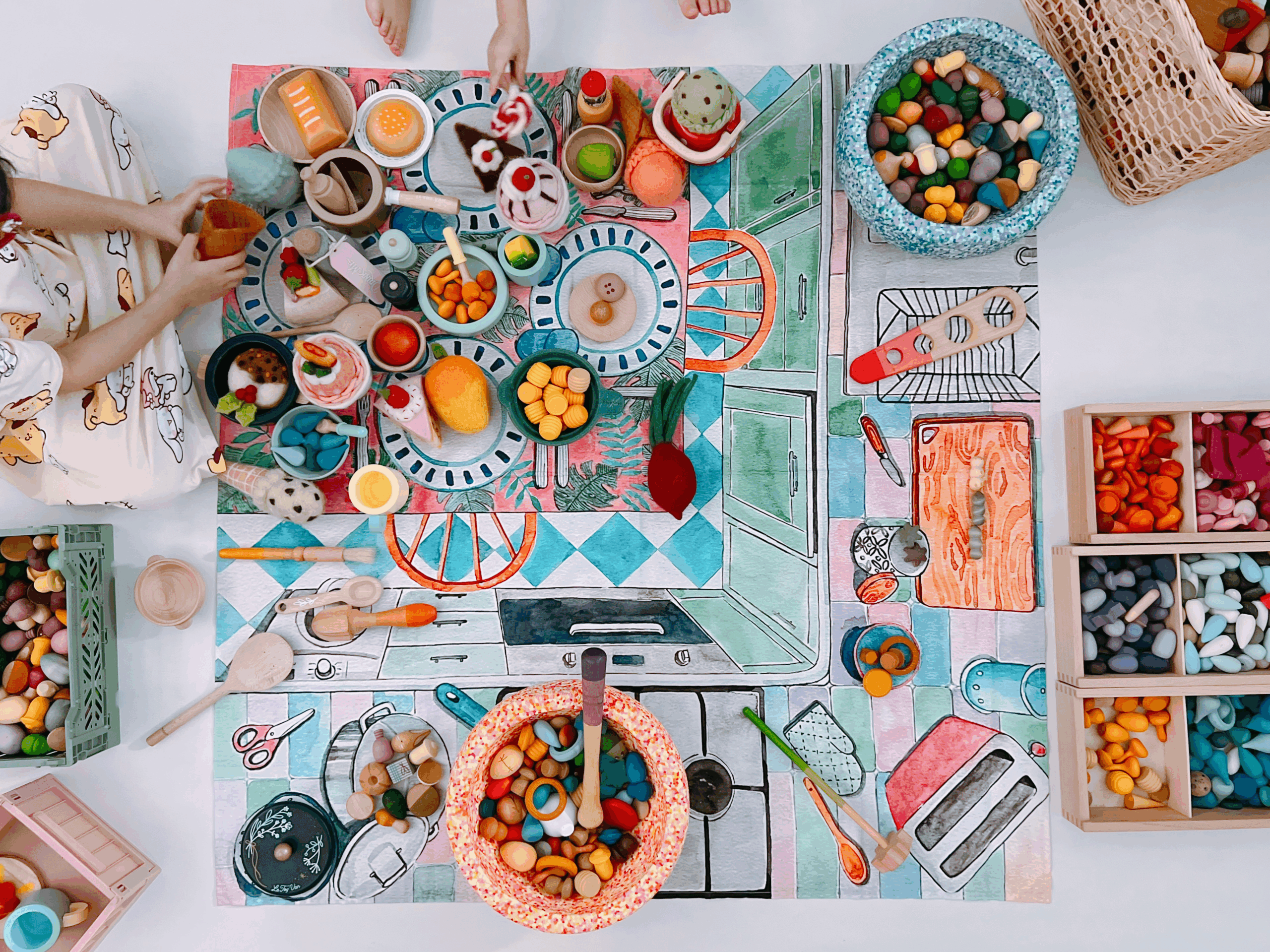
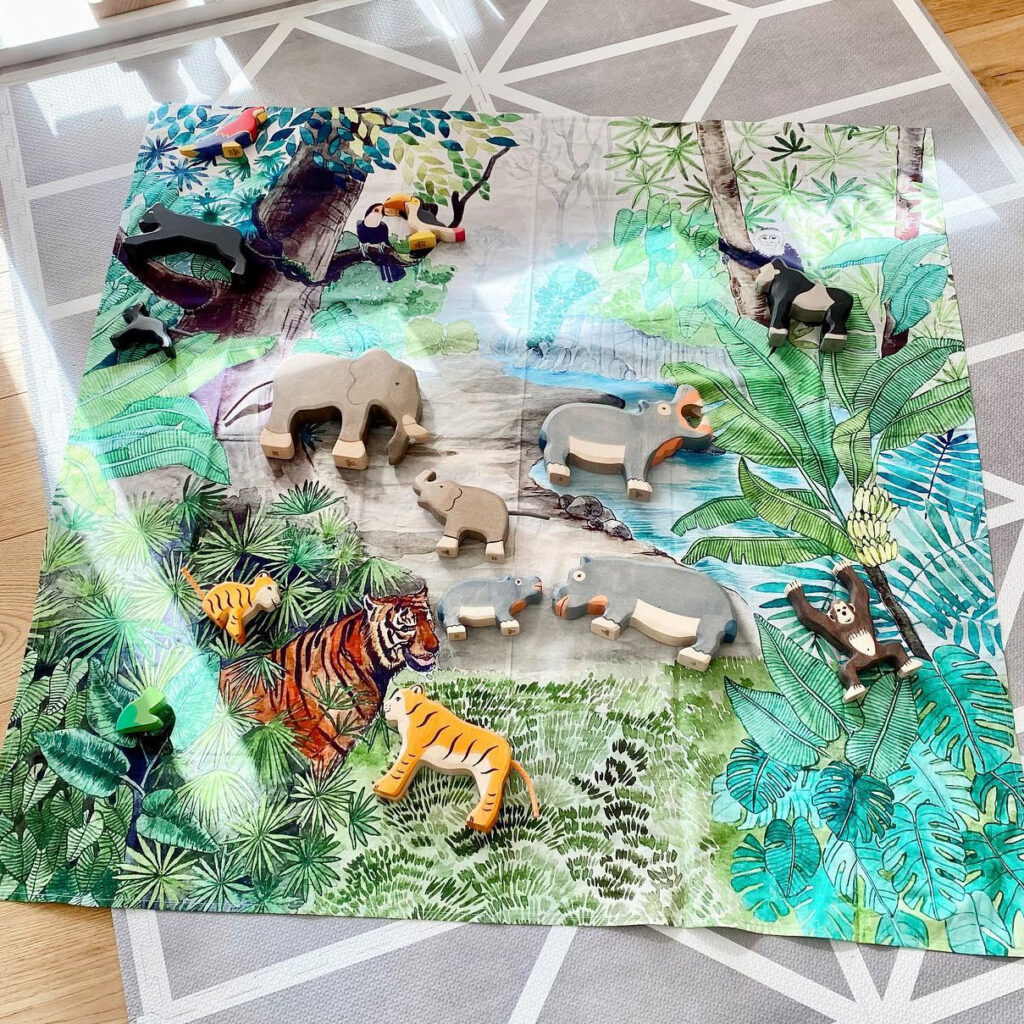
A play cloth gives the story somewhere to happen. Instead of a farm being “somewhere on the rug”, there is a field, a pond and a lane to drive the tractor down. Here is how I would start:
- Pick a world your child already loves. Farm animals? Try Around the farm. Dinosaurs? Land before our time. Sea creatures? Amongst corals.
- Lay it flat on the floor or a low table, somewhere it can stay out for a while.
- Add a handful of figures. Often less is more.
- Add one or two loose parts for extra detail: a few stones, blocks for a fence, a bit of blue fabric for water.
Keeping it fresh
Small worlds do not need to be big or perfect. The trick is rotation. Leave a set-up out for a few days, then swap the figures, add something unexpected, or change the cloth altogether. The same animals feel brand new in a different world.
Older children often start building their own worlds from scratch, which is exactly what you want. The cloth becomes the starting point and the stage, and their imagination does the rest.
Where to start
If you are new to small world play, choose one cloth that matches what your child is into right now and use the toys you already have. That is all you need. You can find more ideas on my Ways to play page.
Love,
Vi x